A second expert set of eyes before the plan is signed.
NgsAdvisory is a physician-led molecular second-opinion clinic. We turn next-generation sequencing into a tiered, resistance-mapped, signed report addressed to the oncologist who will make the decision.
Decision authority stays with the treating physician. Before they sign the plan, we hand them the evidence (tiered, ranked, resistance-mapped).
Built on a single signature.
The clinic is deliberately kept small. Every report carries a personal signature — this is medicine built for accountability, not speed.
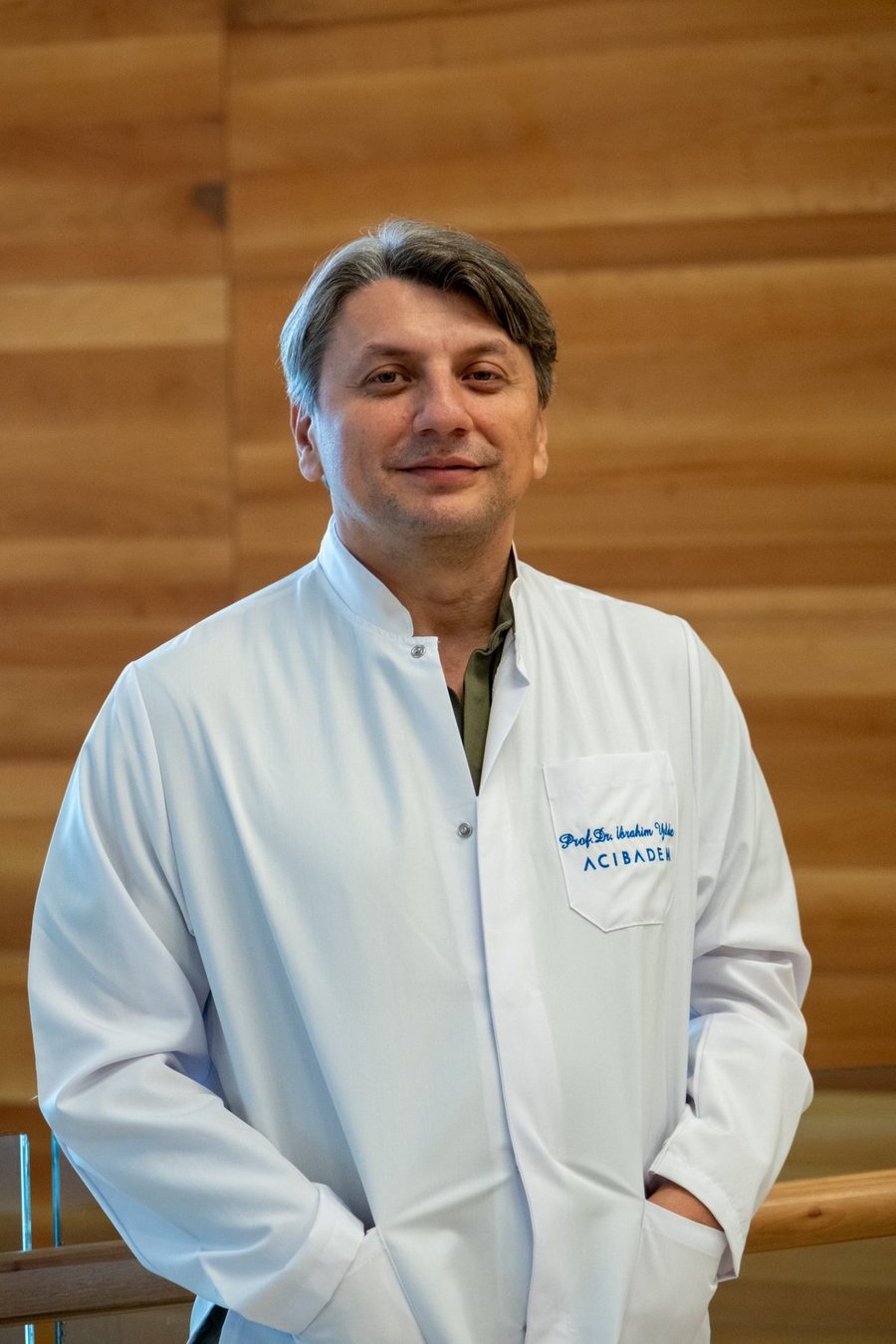
Prof. Dr. İbrahim Yıldız personally reviews every NGS Advisory report. He is a professor of medical oncology with more than 20 years of advanced international clinical experience in molecular oncology and the management of rare, complex cases.
He completed his medical and internal medicine training at Istanbul University-Cerrahpaşa School of Medicine, and his medical oncology specialty training at the Istanbul University Institute of Oncology. He currently serves at Acıbadem Mehmet Ali Aydınlar University — part of one of the region's largest internationally accredited healthcare groups — and is a member of the European Society for Medical Oncology (ESMO) and the American Society of Clinical Oncology (ASCO).
Precision medicine sits at the center of his academic work and clinical practice, with advanced experience in next-generation sequencing and targeted therapies. He has more than 130 peer-reviewed publications, including a corresponding-author study on NGS-based genomic profiling in advanced sarcomas (Frontiers in Oncology, 2025). This research shows up directly in practice: he regularly re-reads NGS panels (FoundationOne, Tempus, Guardant, Caris and others) for international and second-opinion patients, turning raw variant data into a clear, guideline-based plan the treating oncologist can act on.
Every NGS Advisory report is personally reviewed and signed by Prof. Dr. Yıldız, and serves as decision support for the treating physician.
Why a second opinion, and why molecular.
The reading problem at the heart of NGS.
Ordering sequencing has become almost routine. The bottleneck has moved upstream: on a busy Friday afternoon, a 60-page molecular report lands on the desk with twenty-two variants of unclear meaning and a six-line summary written by a system that has never seen the patient.
A panel is not a plan. A plan is what a physician writes after reading the panel line by line, against the literature, against the patient.
NgsAdvisory exists to be that reader. The clinic does one thing: re-classify variants, surface what the algorithm missed, rank treatment regimens by evidence tier, and map the resistance pathway one step ahead. The output is a report a physician can put their own name under.
We do not treat. We do not prescribe. We do not replace the treating oncologist or the tumor board. We are the second expert set of eyes a busy clinic doesn't have time to staff internally — and in molecular oncology, that is exactly the difference between a panel and a plan.
A physician reads it, start to finish.
No automated summary leaves the office. Every variant is read by a clinician against current literature.
Tiered per AMP / ASCO / CAP.
Every actionable finding is classified Tier I–IV with a cited evidence chain, not asserted.
Resistance is mapped one step ahead.
For every recommended regimen, the expected resistance mechanism and next-line option are stated explicitly.
Signed in the patient's language.
Reports are issued in Turkish or English as the physician requests, without losing technical precision in translation.
Behind a single signature, twenty years of medical oncology.
NgsAdvisory is a new clinic. The numbers below belong to Prof. Dr. İbrahim Yıldız — the experience he brings into the reading room.
What we read against.
Every recommendation in our reports rests on a public, peer-reviewed standard. We do not invent classifications, and we do not borrow them from the panel vendor. The job itself is reading.
AMP / ASCO / CAP
The joint consensus on variant classification — Tier I–IV with explicit evidence levels.
NCCN · ESMO
Indication-based treatment algorithms, kept current and cited line by line.
OncoKB · ClinVar · COSMIC
Curated databases for actionability, pathogenicity and somatic prevalence — cross-referenced per variant.
ISO 27001:2022 aligned
ISMS controls aligned to the standard. Reading-room access, retention periods and audit logging are managed accordingly.
GDPR · KVKK
Compliant with EU GDPR and Turkey's KVKK. Patient data is processed only with a signed physician referral and consent.
Encrypted, access-controlled transfer
Encryption, access control and an audit trail for physician-to-physician delivery, available on request.
Send a panel. Get back a second opinion a physician actually read.
The clinic is open to its first referring oncologists. If you have a sequencing panel that needs a second expert set of eyes, we read them in the order they arrive — target turnaround 72 hours, signed by Prof. Dr. İbrahim Yıldız.
Submit your case